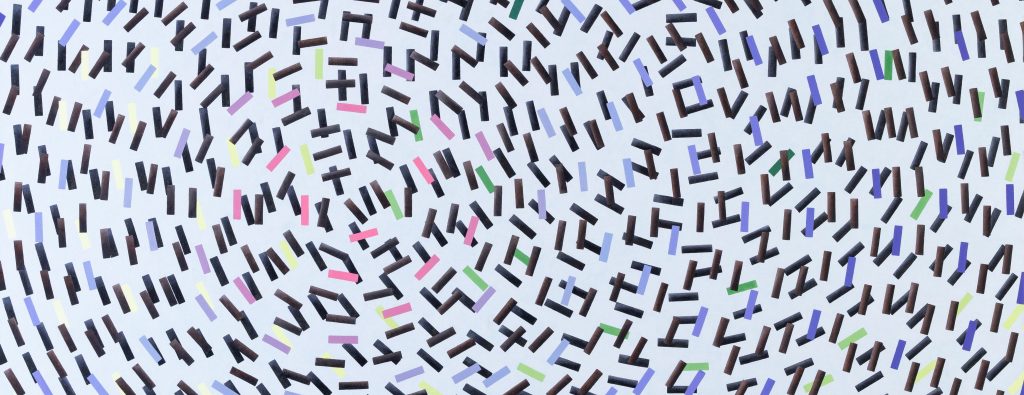
Csaba Kozák - The Power of Waves
About Laszlo Milasovszky’s Artworks
Laszlo Milasovszky has ever been very good in drawing, and for the reason he was an excellent pupil, his teachers let him cover his school desk with a large, white sheet of paper, whereupon he could draw whatever he wanted. Certainly, over and above talent, the impulses of his family also taught him for the love of art. During the process becoming an artist, still in his teens he could travel with one of his parents to West-Europe and Central-Asia, where they visited several museums. (It is worth mentioning that in Hungary at the turn of the sixties and seventies, one of the parents had to stay at home in order to avert immigration, because the comrades thought that nobody intends to leave behind a single parent family. This evil idea worked for the state power, but people could be happy for they could at least travel abroad.) He could see mainly antique collections and that of before the avant-garde era, which deeply touched him. He was inspired to become an artist, especially a sculptor. At the age of 19 he already found his surrounding tight, therefor he immigrated, he crept across the Yugoslavian border at night, at Maribor to Austria. From there he went to West-Germany. His artistic approach was established among others by the Russian constructive artists, Kazimir Malevich and László Moholy-Nagy. In Cologne he could get acquainted with many artists, who have become internationally known by now. His early works can be categorized as representational, figurative art, while he also made experimental photos at the beginning of his career. His works were influenced by the mentality of Constructive Art, Lyrical and Abstract Geometry, and Pattern Painting, too. Besides graphics and paintings, he also makes objects andinstallations. The present book gives a narrow selection from among the works of the last thirty years.
The artist fills in the whole picture field in all of his works, leaving no empty parts as everything is covered with forms and colors. His works overstep the borders of the virtual space, gripped into the wooden frame, as his paintings are not locked, all these wish to spread into the real space. His works are the micro worlds of the infinite universe, which can present in ”parts” the connections of the big ”whole”.
Generally he builds the surface symmetrically, the axis goes vertically and/or horizontally through the center, or may be a bit injured, that is dissymmetrical (Thoughts on Infinity, 2012). His works with organic motives are asymmetric. The foci of his works are placed in the centers or (in case of the circles and spirals running toward each other) are divided and locked into more centers. He makes sketches to his works, knows what he wants, does not let the things happen by chance, though pairing the motives it may also happen that a constellation emerges (Rhythm and Random, 1999). Seemingly he thinks in thematic blocks – let’s say: lines, nets, circles, spirals, etc. – , but if we look at the dates of the works, then it comes out unambiguously that he returns to a given motive only years later, this way the character of series comes to light only after a subsequent categorization. This sort of feedback derives on the one hand from the fact he starts to vary, reconstruct, paraphrase some previous thematics, while on the other hand it is the result of his painting method. We must know that he works on several paintings at the same time. This way he breaks the monotony of the time-consuming, minute execution, as the paint, placed onto the canvas in 5-6 layers, must dry, and in the meantime he can work on another canvas. His use of the material is minimal: he applies ink and pencil to the paper works, pebble and sand from the Rhine riverside to his installations placed on the ground, while he paints his canvases, except one acrylic picture, with oil.
His use of color is partly minimal as he works with black and white and the intermediate shades (Twilight, 1992) or he applies, returning to the tradition of the Russian constructive artists, red, white and black (Complicated Woman, 1994), while in other works he uses the triptych of warmer colors (Milk and Honey, 2001). However, in the majority of his paintings the world of colors is splendidly varied (Witty, 2013), while in other works it is restricted, the pastels dominate the surface (Pastel Network, 2013). However, it may occur that the colors, moving toward the edges of the painting, are getting more and more pale, the process of the visual story slows down and gets lost in the cloud of the past (Present in Infinity, 2015). In some works the straight lines, stripes, streaks, formally starting from one point, dominate the surface, which vertically and horizontally cross each other, and this way these give rhythm to the picture (Burberry’s, 1998). This repetitive network turns around its axes with 90 degree, the structure of wires goes diagonally (Greengray – Random, 1995). The guided line may slip its chain, describing winding curves, and spreads wildly (Snake Nest, 1999). The line of waves becomes a regular mathematical sign: ~ (Roughly Equal, 2015) and ∞ (Thoughts on Infinity, 2012) The circles and spirals make wave the whole surface of the painting, while the picture, widening its micro world, begins to spread to infinity (Sun – Moon – Space, 2014). Therefor, morphologically he applies only some forms/signs, though the variability, repetition, directed motions, rotations and the filling of these with colors result in an unbelievably rich visual world.
The stretched guidance of lines of his structures, networks should suggest some static state, however, the continuous repetition of the geometrical fragments (parallels, diagonal intersections, squares, rectangles, triangles) makes the illusion of motion: the static structure of the work becomes dynamic. While in case of the waves, circles and spirals, no doubt there is mobility and dynamism. The organic elements in the pictures appear not only in the form of the guidance of lines running wild (Sediment, 2000), but many times whirling, amorphous spots also appear in his pictures. The abstraction of motives – earth-horizon-sky – refers to classical landscapes (Twilight, 1992). In another painting, playing with yellow and brown colors, he makes the abstractions of the sun-burnt savannas of the black continent (Africa, 1991). Let’s mention, in connection with the seemingly exact geometrical constructions, that the artist draws and paints his geometrical motives free-hand, the straight lines and the circles/spirals as well. One can notice only more closely that these are not fully exact geometrically. However, in order to increase the speed of the working method, recently he sometimes uses the ruler.
Milasovszky applies returning symbols in his works, which have different meanings in different cultural circles, but basically suggest the same symbolism. The most important motives, having kinetic value, are the (lines of) wave, the circle and the spiral.
The lines of wave is the symbol of regular, cosmic repetition and change. The rhythm of life, the change of day and night, the beat of heart. Every existing thing goes on the lines of wave. The line of waves, growing to a lying number eight, is the symbol of infinity, the Moebius ribbon which returns to itself.
The circle is the most universal symbol of fullness. It expresses the law of the phenomena of life. It refers to infinity, to the ever renewing life. Two circles, intertwining to each other, are the signs of duality, alliance.
The spiral is the symbol of the genesis of cosmic existence. It is the snake what bites into its own tail, the pattern of the water funnel growing narrow in smaller and smaller circles, the helix, the human fingerprint, the chain of DNA, the formation of galaxies. Motion, starting from the center to the right is the sign of genesis, while the motion to the left means destroying. (Both versions, even within one picture, can be found in the artist’s works.)
The artist’s rings of wave, like a pebble thrown into the lake, spread in circles, while his spirals shockingly suggest the phenomenon of interference. (The physical phenomenon of interference – let these spread by waves in water, in air by sound or light – occurs when coherent waves of two different sources meet.) In case of the artist, the waves always strengthen each other, knowing not any border, these wish to spread over the picture frames.
In two of his paintings (Sex & Money, 2012; Money Makes the World Go Round, 2015), suggesting networks or mosaics, the letters of the titles repeat, while in the raster net the international signs of different currencies – US dollar, Eur, English pound – are hidden. The textures of everyday thematic are worked out with the same sensitivity as that of his more meditative works on infinity.
Though, Laszlo Milasovszky’s art can be interpreted, but its world of sight can be hardly expressed in words. The components of his art, the building of his pictures, his technique, use of material, colors and forms, the static and dynamic being of these, his organic and geometric motives, symbols and signs can be decoded, but the sight cannot be substituted for words. In the painting practice of the cognition of infinity, he discovers micro and macro worlds equally, the complexity of which can hardly be caught in writing. In his works there are networks, systems developing, which are obedient to the rules of science. The power of waves rotates circles and spirals in his drawings, paintings, installations built from stones. In the language of painting he is able to tame the severity of geometry, mathematics , physics. He builds up the body from cells, consciously structures the whole of the picture from the tiniest elements. On his dynamic, radiating, pulsating way he creates such a sight with the most minimal means which is unique in its kind. His art cannot be compared to that of others. There is no juggling: the spectator becomes the prisoner of illusions.
Csaba Kozák
Kozák Csaba - A hullámok ereje
Milasovszky László művészetéről
A művészetig
Annyira jól rajzolt, hogy a tanárai még azt is megengedték neki – jó tanuló lévén –, hogy egy nagy méretű fehér papírlapot rögzíthessen az iskolapadjára, amit aztán képekkel borított be. A tehetségen kívül természetesen a családi impulzusok is a művészet szeretetére nevelték. A képzőművésszé válás útján meghatározó élmény volt számára, hogy még kamaszként, a szüleivel tett utazásai során eljuthatott Nyugat-Európa és Közép-Ázsia számos múzeumába. (Megjegyzendő, hogy Magyarországon a hatvanas-hetvenes évek fordulóján a gyerekek csak úgy utazhattak nyugatra, hogy az egyik szülőnek – a disszidálást megakadályozandó – otthon kellett maradnia, mert az elvtársak úgy gondolták, hogy senki sem akar csonka családot hagyni maga után. Ez az életidegen ötlet az államhatalomnak bejött, az emberek pedig örülhettek, hogy egyáltalán világot láthattak.) A kinti múzeumok/gyűjtemények – főleg az antik és az avantgárd megjelenése előtti alkotásokat láthatott – mélyen megérintették. Arra inspirálták, hogy képzőművésszé, kiváltképpen szobrásszá váljon. 19 évesen már szűknek találta itthoni szövegkörnyezetét, így disszidált, Jugoszláviából éjszaka kúszott át a határon, Maribornál Ausztriába. Onnan pedig Nyugat-Németországba vezetett útja. Szemléletét többek között az orosz konstruktivisták, Kazimir Malevics és Moholy-Nagy László alapozták meg. Laszlo Milasovszkynak a végső lökést viszont az adta meg, a Neue Wilde kölni ágának olyan művészeivel ismerkedett meg, mint Jiri Georg Doukupil, Walter Dahn, Peter Bömmels, Peter Adamski, akik mára nemzetközi hírnévnek örvendenek. Korai munkái az ábrázoló/figurális reprezentáció tárgykörébe sorolhatók, miközben pályája elején experimentális fotókat is készített. Műveit az konstruktivizmus, a lírai- és geometrikus absztrakt szemlélet ugyanúgy befolyásolta, mint a Pattern Painting. Grafikái és festményei mellett objekteket és installációkat is jegyez. A jelen kötet az elmúlt közel harminc év terméséből ad szűk válogatást.
Képi építkezés
Laszlo Milasovszky minden munkáján teljes egészében kitölti a képmezőt, nem hagy üres felületeket, mindent megdolgoz formákkal és színekkel. Munkái túllépnek a vakrámába befogott virtuális tér határain, hiszen az alkotások nem lezártak, azok a
valós térbe kívánnak terjeszkedni. Művei a végtelen univerzum mikrovilágai, melyek
a „rész”-ben megmutatják a nagy „egész” összefüggéseit. A teljesen betöltött képmezőt úgy lakja be, hogy általában szimmetrikusan építkezik, a központi magon
áthaladó tengely lehet horizontális és/vagy vertikális, valamint a szimmetria halvány sérülését mutató, azaz disszimmetrikus (pl. Gondolatok a végtelenről, 2012). Az organikus képekre az asszimmetria jellemző. A képek súlypontja vagy a központba esik, vagy pedig (pl. az egymás felé futó körök/spirálok esetében) osztott, több gócpontba zár. Műveihez vázlatokat készít, tudja, mit akar, nem bízza a véletlenre a dolgot, bár a motívumok párba állítása során előfordulhat, hogy olyan konstelláció jön létre, melyre előzetesen nem is gondolt (pl. Ritmus és véletlen, 1999). Látszatra tematikus blokkokban gondolkodik – mondjuk: vonalak, hálózatok, körök, spirálok, stb. – ám ha megnézzük a művek datálását, akkor egyértelműen kiderül, hogy sokszor csak évekkel később tér vissza egy-egy motívumához, tehát a sorozat-jelleg csak az utólagos kategorizálás által derül ki. Ez a fajta visszacsatolás abból adódik, hogy egyrészt elkezd variálni, rekonstruálni, parafrazeálni egy-egy korábbi tematikát, másrészt viszont a festői módszer eredménye. Tudnunk kell, hogy egyszerre több művén is dolgozik. Ezzel megtöri az időigényes, részletgazdag, aprólékos kivitelezés monotóniáját, másrészt az 5-6 rétegben felvitt festékrétegnek száradnia kell, eközben pedig egy másik vászon elé állhat. Anyaghasználata minimális: a papírképekhez, tintát és ceruzát használ, a földön összeállított installációihoz Rajna-parti kavicsot és homokot, míg vászonképeit – az egyetlen akril kivételével – olajjal festi.
Színek és formák
Van, hogy minimalista színkezeléssel élve egy képtéren belül csak a fekete-fehér és annak köztes árnyalataival dolgozik (pl. Szürkület, 1992) vagy pedig az orosz konstruktivista hagyományokhoz visszacsatolva alkalmazza a vöröset, fehéret, feketét (pl. Komplikált nő, 1994), másutt a melegebb színek hármasságát adja (pl. Tej és méz, 2001). Műveinek döntő többségében viszont a színvilág hol pazarul dübörgő (pl. Ötletgazda, 2013), hol pasztellbe hajlóan visszafogott (Pasztell hálózat, 2016), ám egy képmezőn belül az is lehetséges, hogy a színek a kép peremvidékei felé haladva egyre halványabbak, a képi „történés” folyamata lelassul, a múlt ködébe vész (pl. Jelen a végtelenben, 2015). A munkák egy részénél formailag a pontból indított egyenesek (csíkok, sávok) uralják a felszínt, melyek horizontálisan és vertikálisan keresztezve egymást ritmust adnak a képnek (pl. Burberry’s). Ez a repetitív hálózat többször a tengelye körül 90 fokkal elfordul, átlósan halad a rácsszerkezet (pl. Zöldesszürke – Véletlen, 1995). Az irányított vonal elszabadulhat, kanyargó görbéket
ír le, burjánzóan terjeszkedik (pl. pl. Kígyófészek, 1999). A hullámvonal szabályos matematikai jellé formálódik: ~ (pl. Megközelítőleg egyenlő, 2015) és ∞ (pl. Gondolatok a végtelenről, 2012). A körök és spirálok által a hullámzás átjárja az egész képmezőt, a kép mikrovilágát kitágítva a végtelenbe terjeszkedik (pl. Nap – Hold – Tér, 2014). Morfológiailag tehát a művész igen kevés formát/jelet használ, ám azok variabilitása, repetíciója, bemozgatása, rotációja és színekkel való feltöltése egy hihetetlenül gazdag képi világot eredményez.
Statikus – dinamikus, organikus – geometrikus
Struktúráinak, hálózatainak, rácsszerkezeteinek feszített vonalvezetése statikusságot kellene, hogy sugalljon, ám a geometrikus fragmentumok (párhuzamosok, átlós kereszteződések, négyzetek, téglalapok, háromszögek) a folyamatos ismétlődés révén a mozgás illúzióját keltik: a mű statikus szerkezete dinamikussá válik. A hullámok, hullámzás, körök és spirálok esetében pedig egyértelmű a mobilitás és dinamizmus.
Az organikus képi elemek nem csak a burjánzó vonalvezetés (pl. Üledék, 2000) formájában jelennek meg, hanem kavargó, amorf pacák is feltűnnek a képmezőben
(pl. 50 vagy 80, 1994). Úgy absztrahál, hogy a kép felépítésével – föld-horizont-ég – utal a klasszikus tájképekre (Szürkület, 1992). Másutt sárga színekkel játszva idézi meg a napraforgó- és gabonamezőket (Magyar táj – Monokultúra, 1992), vagy éppen
a fekete kontinens nap-égette szavannáit (Afrika, 1991). A látszatra tökéletesen mértani szerkesztettség kapcsán meg kell említenünk, hogy a művész szabad kézzel
rajzolja-festi geometrikus motívumait, az egyeneseket és a köröket/spirálokat egyaránt, ami fantasztikus teljesítmény. Az, hogy mértanilag nem pontosak a képi
elemek, csak közelről vehető észre, bár az utóbbi időben – a munkafolyamat gyorsítása érdekében – néha megengedte magának a vonalzó használatát.
Szimbólumok
Milasovszky a műveiben állandóan ismétlődő szimbólumokat használ, melyek
más-más kultúrkörökben különböző jelentésekkel bírnak, de alapvetően hasonló
szimbolikát sugallnak. A legfontosabb, kinetikus értékkel bíró főmotívumok a
hullám(vonal), a kör és a spirál. A hullámvonal a szabályos, kozmikus ismétlődés és változás jelképe. Az élet ritmusa, éj és nappal változása, a szív dobogása. Minden, ami létezik, hullámvonalon halad.
A fekvő nyolcassá bővülő hullámvonal a végtelen jele, az önmagába visszatérő Möbius-szalag. A kör a teljesség legegyetemesebb szimbóluma. Az élet jelenségeinek mindenben visszatérő törvényét fejezi ki. A végtelenségre, az örökkön megújuló életre utal.
Az egymásba hatoló két kör a dualitás, a szövetség jele.
A spirál a kozmikus lét keletkezésének szimbóluma. Nem más, mint a saját farkába harapó kígyó, az egyre kisebb körökben szűkülő víztölcsér rajzolata, a csigavonal, az ujjlenyomat, a DNS láncolata, a galaxisok formába rendeződése. A spirál magjából jobbra induló mozgás a keletkezés, teremtés jele, míg a bal felé induló a pusztítást,
rombolást képviseli. (Mindkét változat – akár egy képtéren belül is – megtalálható a
művész munkáiban.)
A művész hullám-gyűrűi a tóba dobott kavics mintájára köröket leírva haladnak a maguk útján, ugyanakkor spiráljai is kísértetiesen emlékeztetnek az interferencia jelenségére. (Az interferencia fizikai jelensége – legyen szó a vízben, a térben a hang vagy a fény útján terjedő hullámokról – akkor következik be, ha két különböző forrású, koherens hullám találkozik. Az egyes pontokba más-más fáziskülönbséggel érkező hullámok vagy erősítik vagy gyengítik egymást.)
A művész olvasatában viszont a hullámok minden esetben erősítik egymást, akadályt nem ismerve a kép keretein túlra kívánnak terjeszkedni.
Optikai illúzió
Laszlo Milasovszky művészetét lehet ugyan elemezni, de látványvilága meghaladja a
narratív megközelítés határait. Műveinek összetevőit, képi világának építkezését, technikáját, anyaghasználatát, színeit és formáit, azok statikus és dinamikus mibenlétét, organikus és geometrikus motívumait, szimbólumait lehet ugyan dekódolni, ám a látvány szavakkal nem helyettesíthető. Ő a végtelen megismerésének
festői útján ugyanúgy felfed mikro- és makrovilágokat, melyek komplexitása írásban nehezen ragadható meg. Műveiben mértani-matematikai szabályoknak, törvényeknek engedelmeskedő hálózatok, rendszerek bontakoznak ki. Körök és spirálok forognak
rajzain, festményein, kövekből építkező installációiban. A tudományok (mértan, matematika, fizika) szigorát a festészet erejével képes megszelídíteni. A sejtekből testet épít, tudatosan szerkeszti meg a legparányibb momentumokból a kép egészét. Dinamikus, sugaras, pulzáló útján pedig olyan látványt teremt a legminimálisabb eszközökkel, ami páratlan a maga nemében, mások művészetével nem rokonítható. Nem csalás, nem szemfényvesztés: a néző optikai illúziók rabjává válik.
Kozák Csaba